Future architects need future skills. And older ones too.
posted on Jun 22, 2026
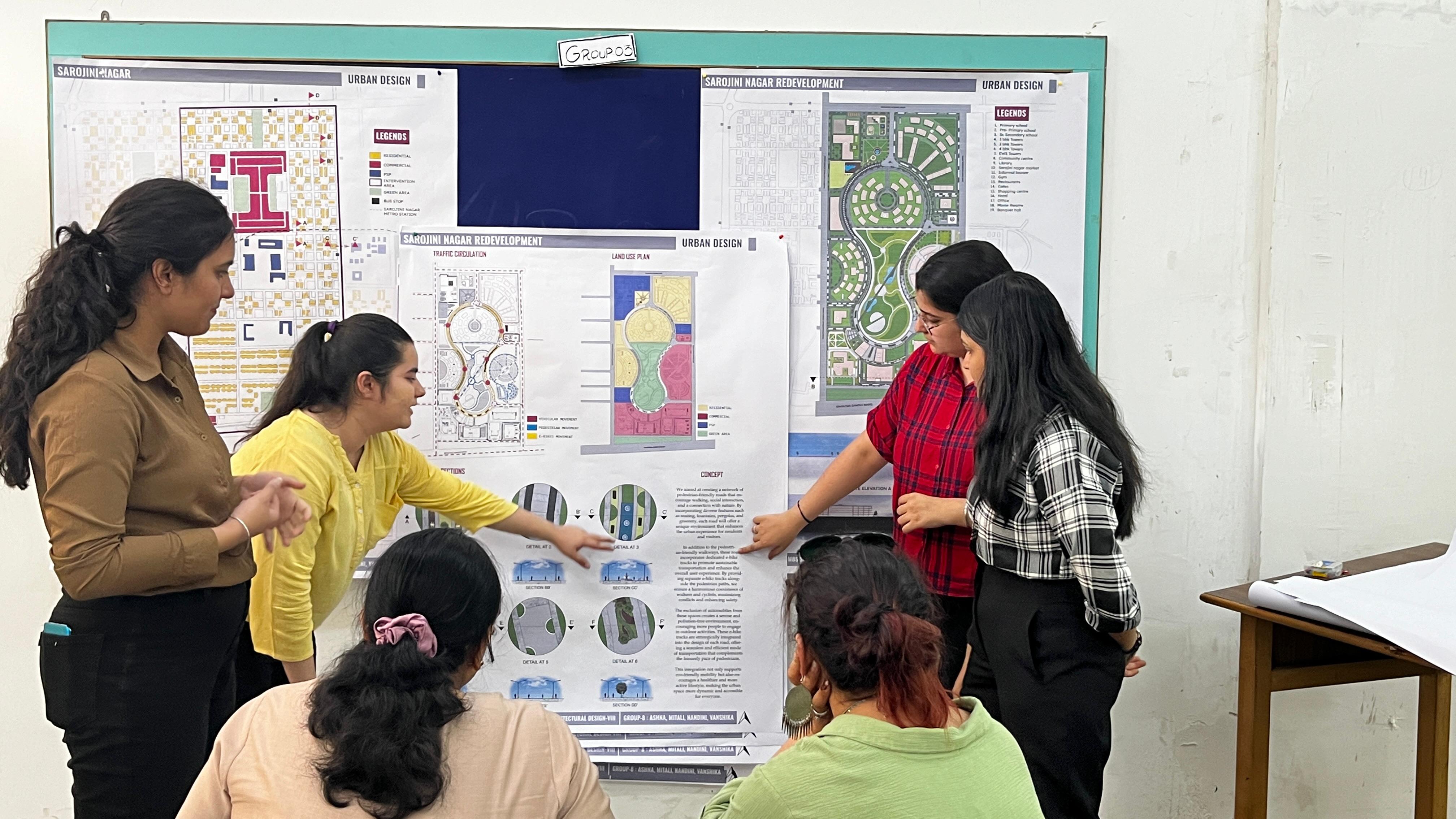
AI has quietly become an instrument in the architecture studio. An honest reading of what it does, what it cannot do, and how MBS teaches both.
A few years ago, AI in an architecture studio meant a clever rendering tool. Today it sits closer to the centre of the day. AI is in early sketching, in energy modelling, in the way large firms search past projects for a reference that fits. The profession has not been replaced. It has, quietly, gained another instrument.
That changes what a graduate needs to know. A student leaving a B.Arch this year will join firms where AI tools sit beside the older software, sometimes inside the same project file. The question is not whether to use them. It is whether the student has the judgement to use them well, and the confidence to set them aside when the design demands a slower hand.
MBS treats AI as a working skill, not a trend. From the second year onwards, students use generative tools to test design options when ideas are still cheap. They run environmental simulations to make decisions about orientation, glazing, and ventilation. They write small scripts to push a parametric idea further than a sketch can take it. They learn what AI is good at, and where it fails.
None of this is taught as magic. An AI is a tool with strong opinions of its own. A student who learns it well learns to argue with it. They learn when its first answer is enough, when its tenth is better, and when the right answer is to close the program and pick up a pencil.
The future of practice will reward architects who can hold two skills at once. The old craft, and the new fluency. MBS is committed to both.